What If Cities Didn’t Just Make Space for Nature, but Rebuilt It?
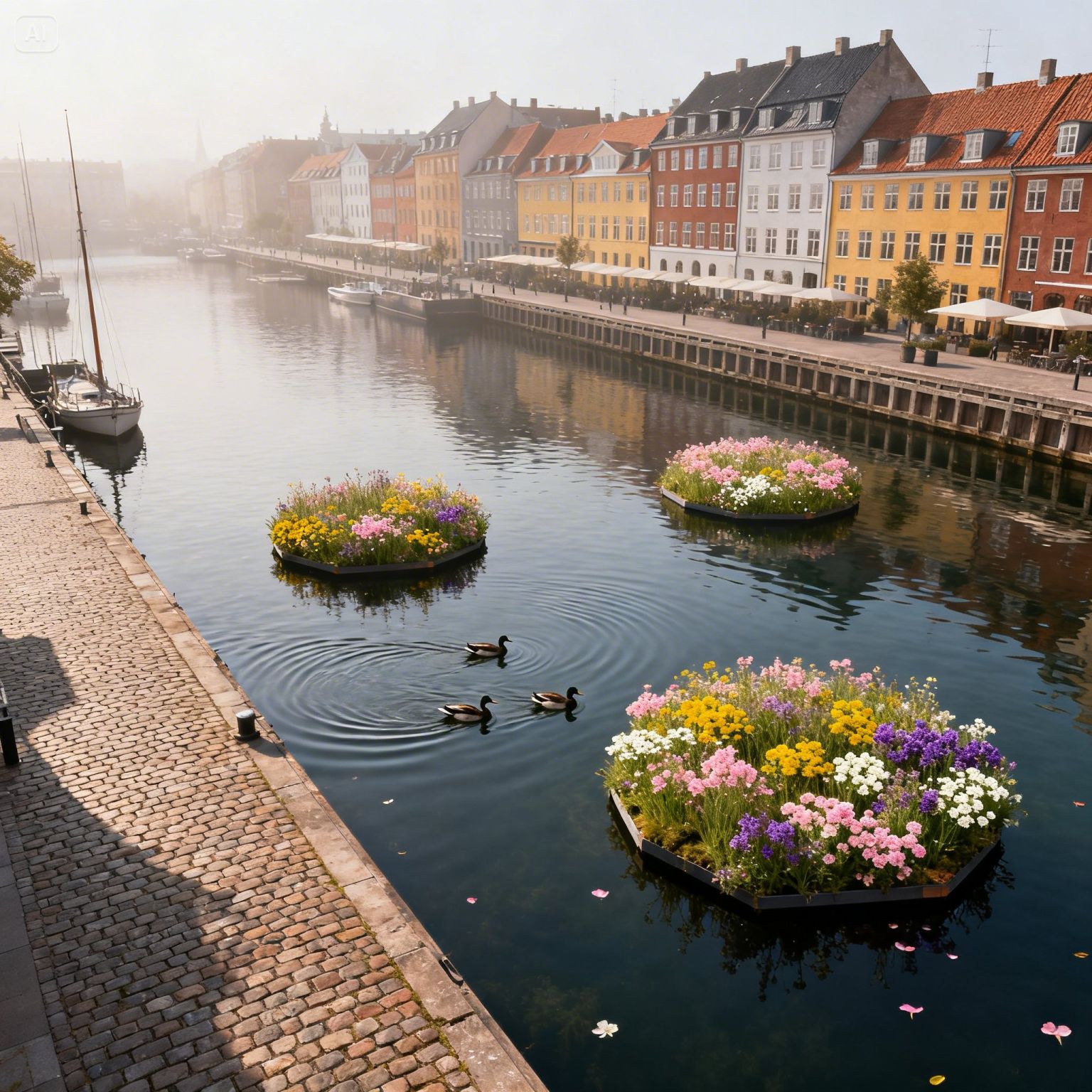
In Denmark, a small but meaningful shift is beginning to reshape urban harbours. Floating islands planted with native wildflowers are being introduced into waterways, turning otherwise hard, engineered edges into living ecosystems.
These are not symbolic gestures. The islands are designed as modular platforms that support soil, grasses and flowering plants, creating real habitats for bees, butterflies and birds in places where biodiversity has largely been designed out.
What’s particularly interesting is how layered the impact becomes. Above the surface, pollinators return. At water level, birds gain resting and nesting space away from human activity. Below, the submerged structures begin to function like artificial reefs, supporting algae, shellfish and small marine life.
It’s a reminder that urban design doesn’t have to choose between function and ecology. In cities where land is limited, nature doesn’t need to be pushed further out, it can be reintroduced directly into the infrastructure itself.
This feels especially relevant for waterfront cities globally. As density increases, the question shifts from how much we can build, to how intelligently we can integrate what was lost.
When environments become more considered, more layered, the way spaces are presented and understood becomes part of the value equation.
#UrbanDesign #FutureCities #SustainableCities #UrbanEcology #Biodiversity #CityPlanning #Architecture #WaterfrontLiving #PropTech #RealEstateInnovation
Originally posted on LinkedIn