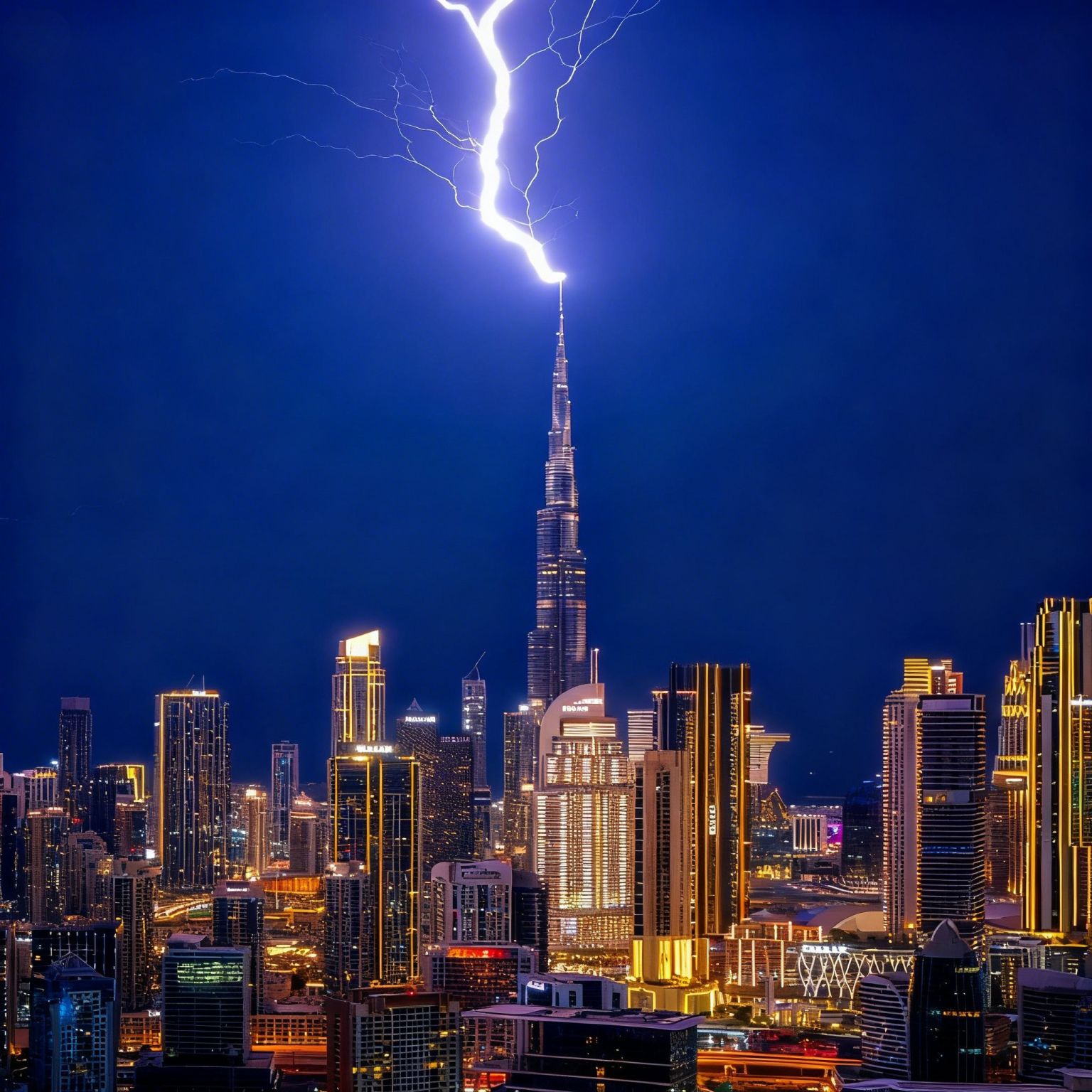
Burj Khalifa Strike Underscores Advanced Skyscraper Engineering
In a recent evening storm, lightning struck the Burj Khalifa, briefly illuminating the skyline as heavy rain moved across the UAE.
Moments like this feel dramatic, but for a building of this scale, they are expected.
At 828 metres, the tower naturally becomes the highest point in the city, making it the most likely place for lightning to strike during a storm. Rather than resisting this, the building is designed to receive it, acting as a controlled lightning rod within the urban landscape.
At its peak, a specialised system intercepts the strike, directing the electrical current into a network of conductors embedded within the structure. From there, the energy is carried down along the building’s steel frame, which functions as a secure and continuous pathway.
Crucially, the current never enters the interior. Instead, it is guided safely into the ground through an integrated grounding system, protecting occupants, systems, and infrastructure throughout the tower.
What appears as a sudden, powerful event is in reality a carefully managed process. A release of natural energy that has already been anticipated and resolved through design.
Lightning itself forms through imbalances between storm clouds and the ground. As particles collide within the cloud, electrical charges build until the difference becomes too great, and energy is discharged.
For the Burj Khalifa, this is not unusual. Multiple strikes have been recorded over time, each handled as intended, without impact to the building or those inside.
While visually striking, it serves as a reminder that resilience is a fundamental requirement in buildings of this scale.
#BurjKhalifa #DubaiRealEstate #SkyscraperEngineering #StructuralEngineering #BuildingDesign
Originally posted on LinkedIn